Hey Reader,
Two people in your business describe the same process differently. That is the clearest signal it is not ready to automate. You do not have a workflow, you have two workflows and a disagreement.
Automate it anyway and you lock in whichever version the person configuring it happened to believe. This week's first two reads are about telling those cases apart before you spend anything.
What an AI agent actually is, and when not to buy one

A chatbot responds. An agent acts. Three things separate a real agent from a chatbot with better marketing: it calls your other systems, it runs several steps from one trigger, and it runs unattended. Miss any of the three and what you are buying is an assistant. Often useful, usually cheaper, not the thing on the price tag.
Prices run about $30 to $500 a month, and most vendors meter by task volume, so the bill spikes in your busiest month. The number nobody quotes is maintenance: a CRM field gets renamed, a form adds a question, and the agent quietly does the wrong thing until someone notices. The guide covers the three jobs small businesses actually hire agents for, and the four situations where the honest answer is not yet.
Read the buyer's guide →
What a missed call is actually worth
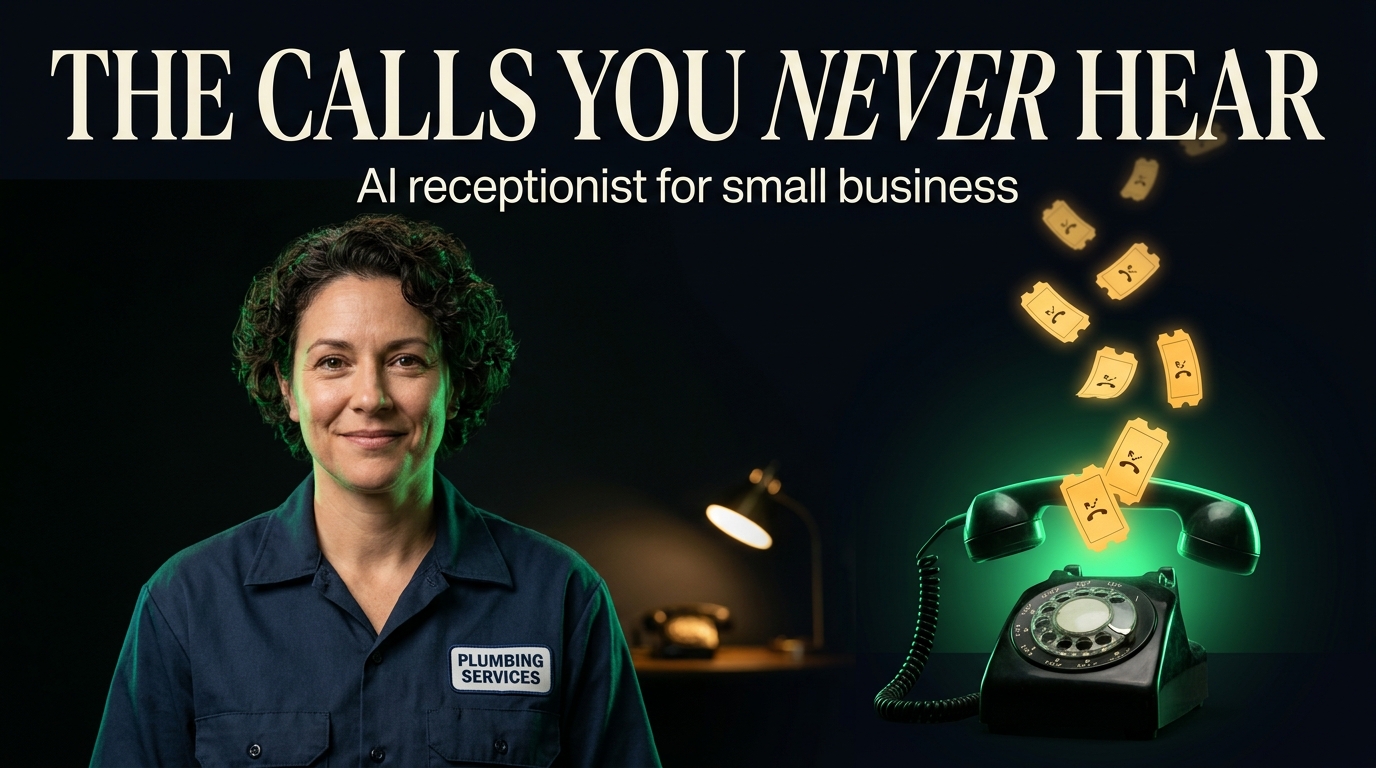
If you are missing calls, the comparison is not a human receptionist. It is voicemail. Which means the deciding number was never the subscription price. At six missed calls a week and a $450 average job, the tool pays for itself several times over. At an $80 average job, it does not. Same tool, same price, opposite conclusion.
The post has the table, plus the calls an AI receptionist should never take: complaints, cancellations, billing disputes, anything urgent. And the fourth option nobody sells you. If your missed calls cluster in a predictable window, an overflow-to-mobile rule fixes it for nothing. Worth checking when the calls are missed before buying anything that answers them.
Run the numbers →
Claude Opus 5 lands within 0.5% of the frontier, at half the price
Different problem, same theme: what a thing costs versus what it returns. Anthropic shipped Opus 5 on July 24 at exactly Opus 4.8's price, and it lands within 0.5% of Fable 5's peak coding score for half the money. On computer use it beats Fable 5 outright at roughly a third of the cost. Because the price did not move, the upgrade is a model-string swap with no budget conversation attached.
One thing worth acting on today: the prompting advice that has held for years now backfires. Opus 5 verifies its own work without being asked, so "double-check your answer before responding" pushes it into over-verification and burns tokens on work it was already doing. If you carried that instruction over from an older model, delete it.
See the numbers →
25 Claude Code releases in four weeks
And the tooling underneath it. Three shifts carry the window. Claude Sonnet 5 launched with a native 1M-token context window, though "default" now depends on your plan: Free and Pro get Sonnet 5, while Max, Team, and Enterprise still resolve Default to Opus 4.8. Subagents moved to the background, so Claude keeps working instead of stopping to wait. And the permission system was renamed, extended, and audited.
The change that lands hardest if you run worktrees: "always allow" rules now save at the repository root, so an approval you grant once persists across every worktree of that repo. That ends the re-approve-everything ritual. Version numbers on all of it, including the caps that keep the new parallelism from running away.
See what changed →
Both of the first two reads land in the same place: the decision is made by your numbers, not by the tool. Missed calls per week. Average customer value. Whether two people in the building describe the process the same way.
So we built the worksheet that produces those numbers, and it costs nothing. Twenty minutes against one week of real observation. An hour ledger showing where the team's week actually goes, five axes that predict whether a fix pays off (including the one that vetoes the other four: liability), and a 2x2 that sorts each workflow into automation, AI, both, or neither. You finish with one workflow, one measurable target, and one gap to close before you spend anything.
Reply and tell me which one was the read for you. I read every reply.
– Alex
P.S. – The conversations behind reads like these happen in the WotAI Skool community. 760+ builders, three live calls a week, free to jump in.